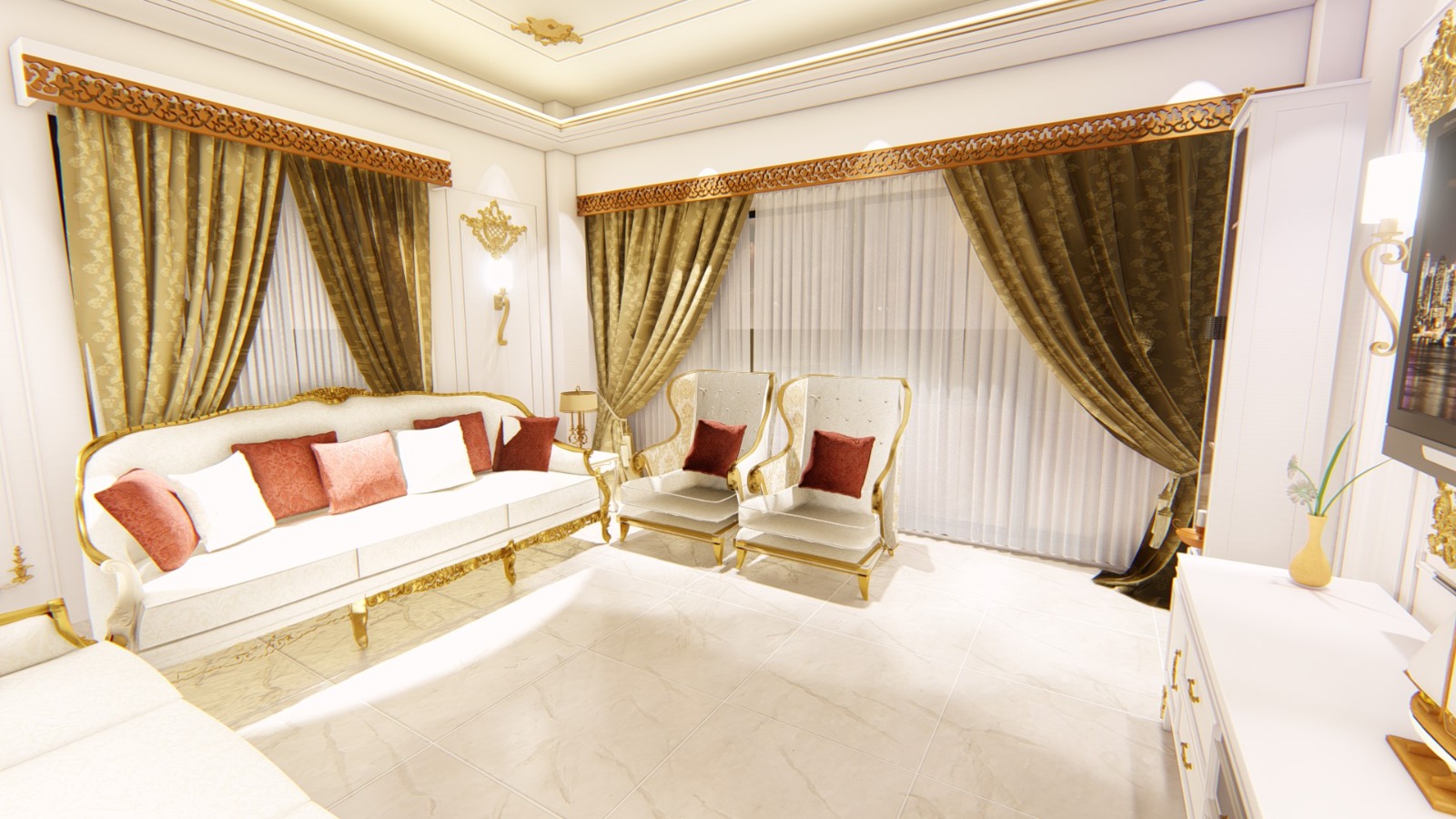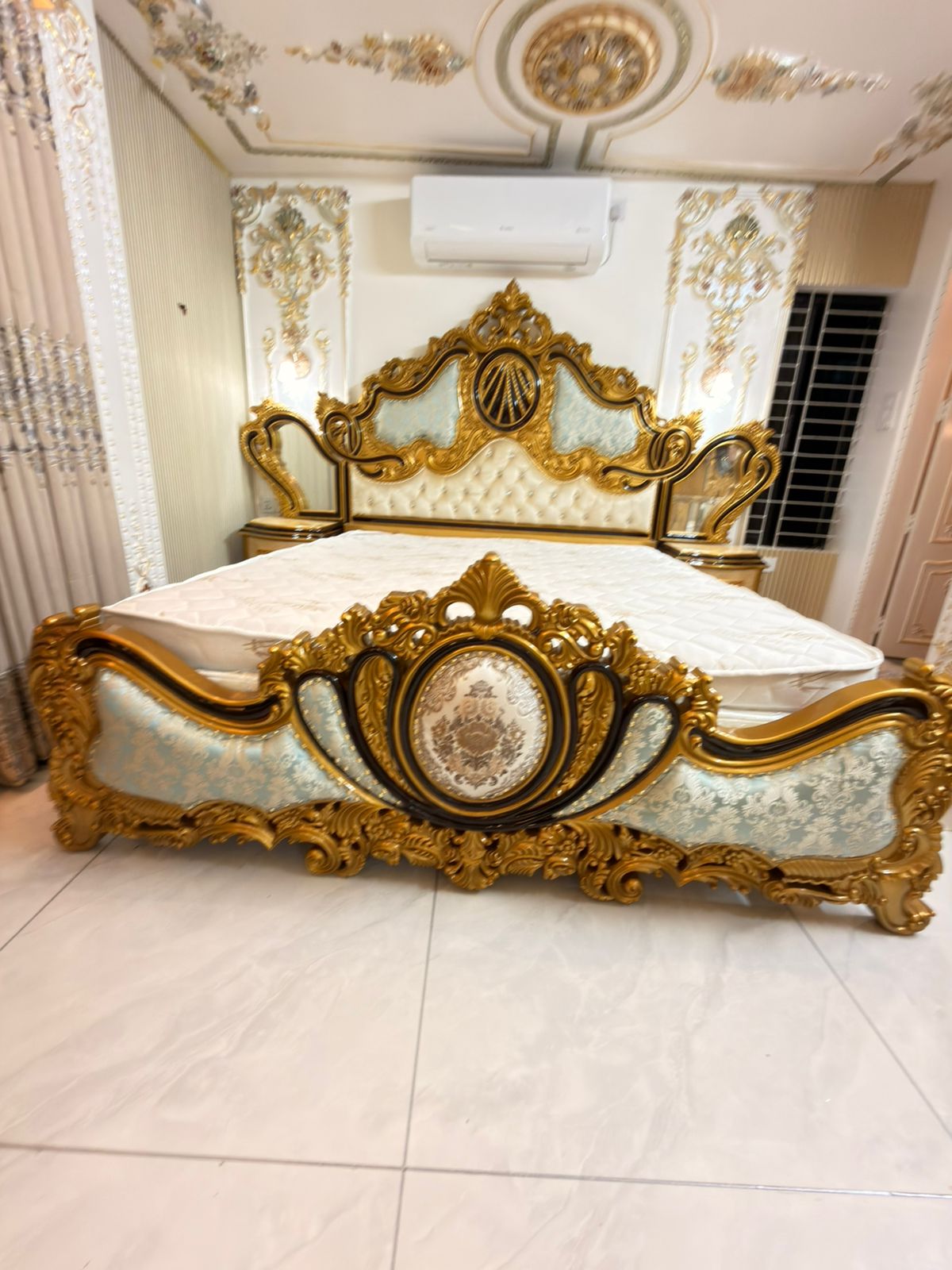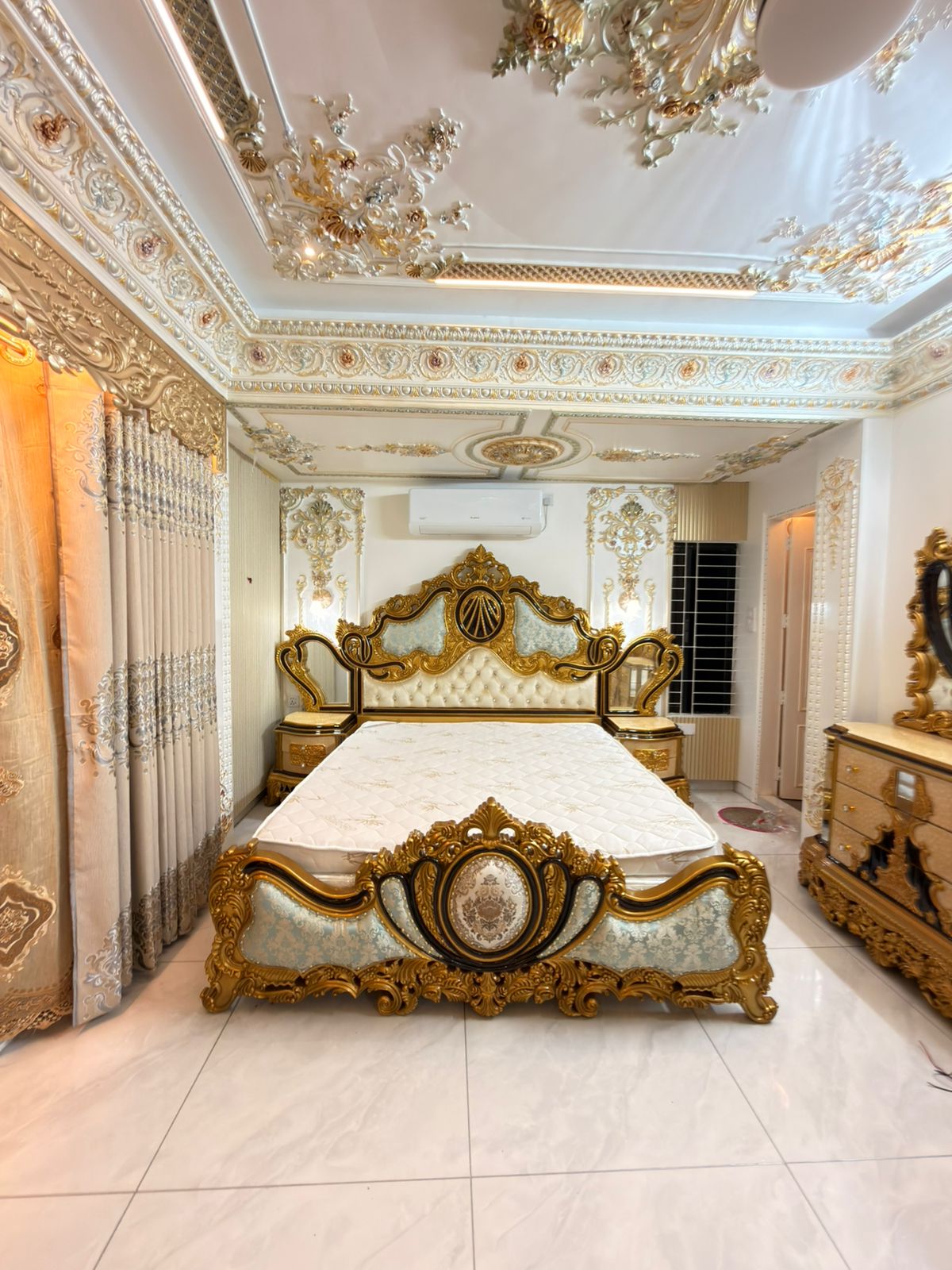
Clients rarely walk in undecided between "classic" and "modern" as abstract ideas — they walk in with a Pinterest board of both, because both look good in photographs. The harder question is which one will still feel right in your actual room, with your actual ceiling height and your actual budget, five years from now.
It starts with the ceiling, not the furniture
Classic interior work — carved cornices, ceiling medallions, gilded mouldings — reads as detail from a normal viewing distance, which means it needs a ceiling high enough for that detail to register instead of feeling like clutter overhead. As a rough guide, classic ceiling treatments look proportionate from about 10 feet (3 metres) up; below that, the same detailing can make a room feel lower than it is. Modern interiors, built around clean lines and concealed lighting, don't have that constraint — which is one reason modern design has become the default in newer, lower-ceiling apartment construction.
Budget shows up in different places
The two styles don't just cost different amounts — they spend the budget in different places. Classic interior work concentrates cost in labour: hand-finished plaster cornices, carved and gilded furniture, and fitted drapery all take skilled hours that don't shrink with volume. Modern interior work concentrates cost in material and fixtures instead — the finish quality of a handle-less cabinet or a concealed light channel is unforgiving of a cheap substitute in a way a classic room, with more visual noise to hide behind, sometimes isn't.
In practice, this means a modest classic room can look convincing on a tighter budget than a modest modern one — but a high-budget classic room costs disproportionately more than a high-budget modern room, because more of that extra spend goes into hours, not materials.
Ask how long you're staying before you ask what looks better online. Style decisions age very differently over five years than furniture does over five months.
How long you're staying matters more than either of the above
Classic interior design ages slowly by design — it was never chasing a current trend, so it doesn't look dated the way a very of-the-moment modern finish sometimes can a decade later. If you're building a long-term family home, that slow aging is an argument in the room's favour. If you're fitting out a rental or a home you expect to sell within a few years, modern's broader buyer appeal and lower renovation cost per square foot usually make more financial sense.
A middle path: classic structure, modern restraint
Most of Midpoint's residential work in Dhaka isn't purely one or the other — it's a classic structural language (a single ceiling medallion, one carved furniture anchor piece like a bed or a console) set inside an otherwise restrained, modern material palette. This gives a room a sense of occasion without needing gilding on every surface, and it's usually the more defensible choice on a mixed budget.
Three questions to answer before your first design meeting
- What's your actual ceiling height, room by room? (Classic detailing needs the room to support it.)
- Are you furnishing to live in this for 10+ years, or to sell or rent within 3–5?
- Would you rather your budget go into skilled labour and detailing, or into material and fixture quality?
Midpoint designs both classic and modern interiors in Dhaka, and quite often a blend of the two — the answers above are usually enough to point toward which one fits before a single material sample is chosen.